Equipment Comparisons
Articulated vs Telescopic Spider Manlift: Which Boom Suits Your Job?
Both are tracked spider lifts, but the boom geometry decides whether you can reach the work at all. Here is how contractors in Saudi Arabia choose between the two.
Aerial Spider Access Company Technical Team · 12 August 2026 · 7 min read
The difference in boom geometry
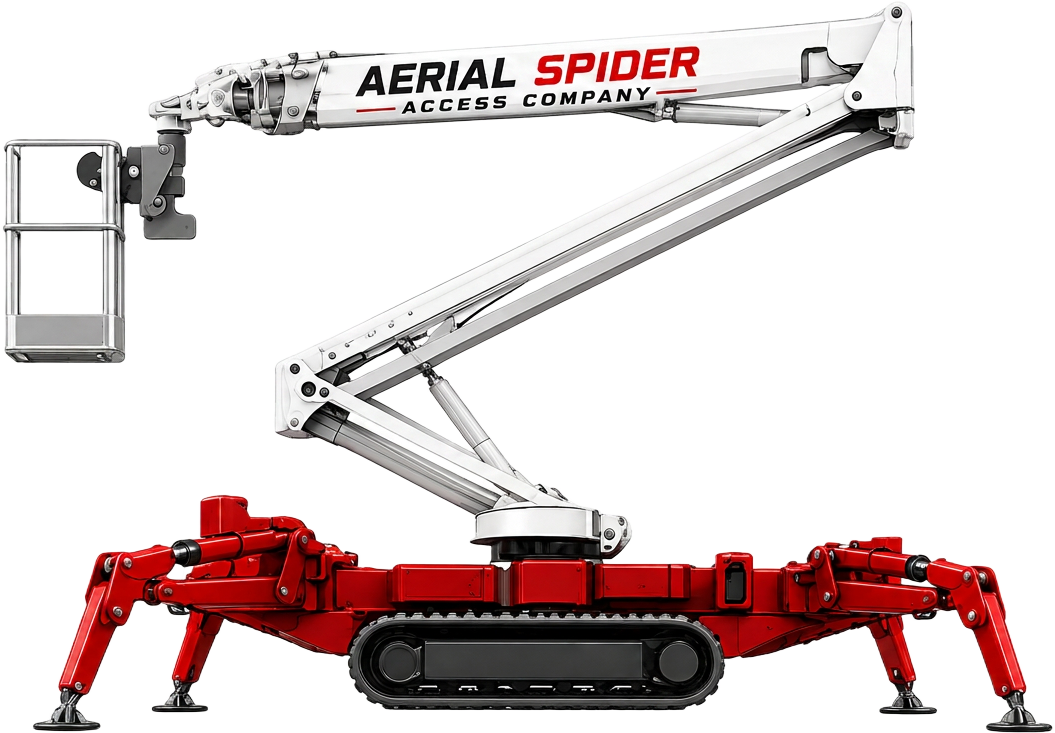
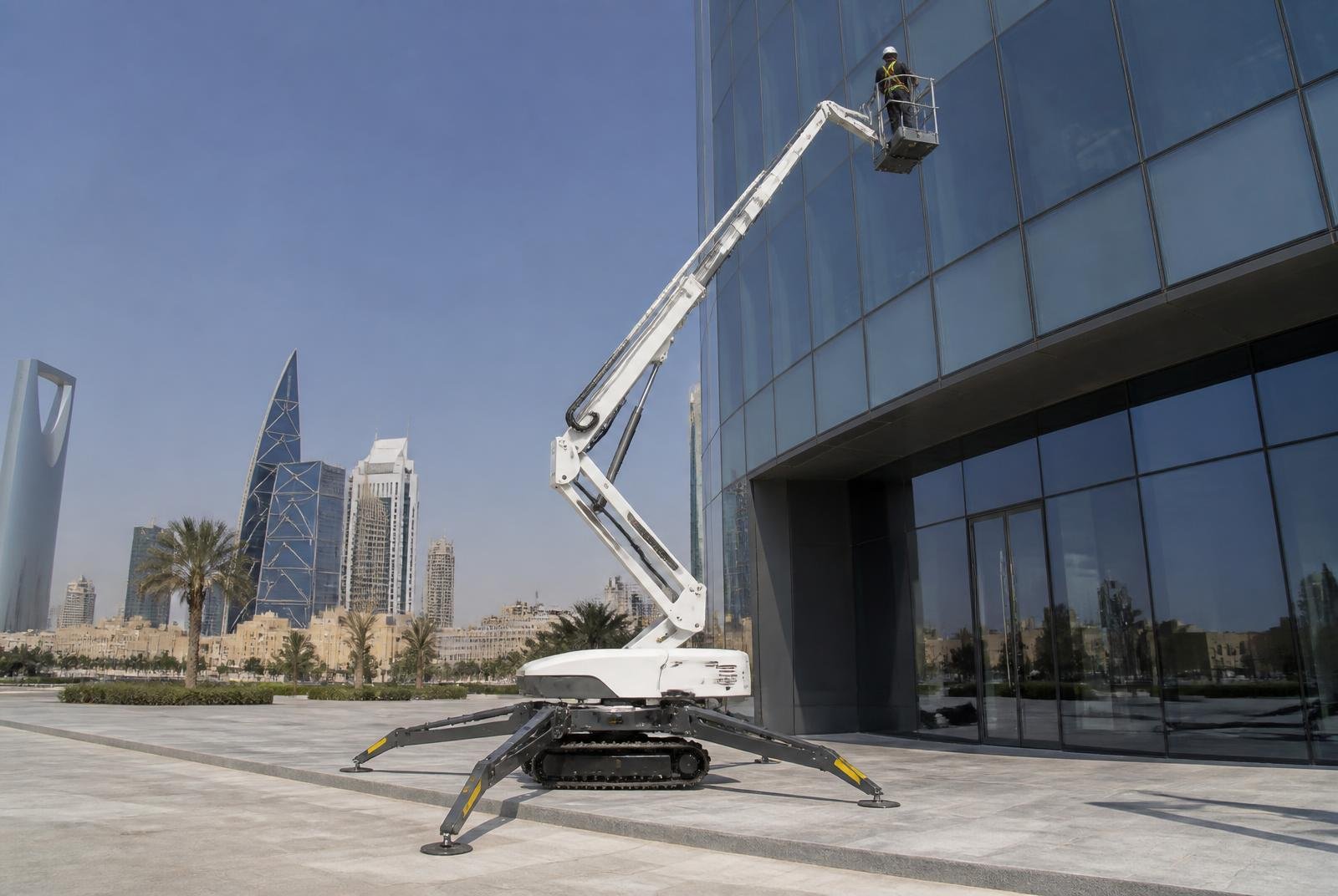
An articulated spider manlift uses jointed boom sections, so the platform can travel up, then over an obstruction and back down towards the work. A telescopic spider manlift extends in a straight line, trading that flexibility for reach and speed at height.
Our articulated spider lifts cover 16m, 18m, 21m, 25m, 32m and 58m working heights. The telescopic classes run 27m, 30m, 35m, 37m, 39m, 43m, 49m and 52m. Below about 25m the choice is usually articulated for up-and-over movement; above it, telescopic for straight-line reach.
When to choose an articulated spider manlift
Choose articulated when the work sits behind or above something you cannot move: a canopy, a pipe rack, an atrium balustrade, planting, a mall skylight or a curtain wall set back from the setup position. The jointed boom lets you clear the obstruction rather than reposition the machine repeatedly.
Indoor and courtyard access in Riyadh, Jeddah and Dammam is typically articulated work, because setup space is tight and the platform has to be threaded into position instead of driven at it.
When a telescopic spider lift is the better machine
Telescopic booms win on clean vertical facades, tank shells, flare stacks, steel frames and stadium structures where the platform can approach the work directly. Fewer joints means faster positioning and, at the same working height, generally more usable horizontal outreach.
Above roughly 35m the telescopic classes cover heights the articulated range does not, apart from the 58m machine, so tall industrial structures in the Eastern Province usually end up on a telescopic machine.
What to confirm before you book either type
Give us the working height at the actual work position, the horizontal distance from where the machine can stand, the stowed width of the tightest opening on the access route, and the surface the outriggers will land on. Those four figures decide the class far more reliably than a machine name.
All classes are available in diesel, electric and hybrid power, so indoor or occupied-building work does not have to compromise on reach.