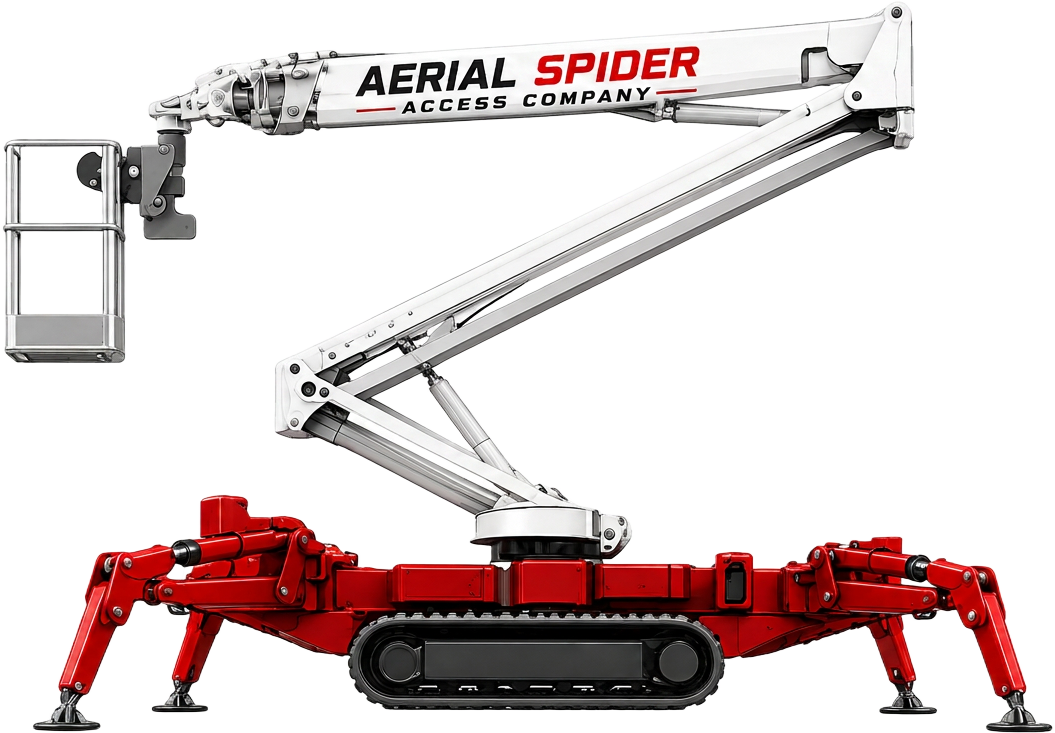
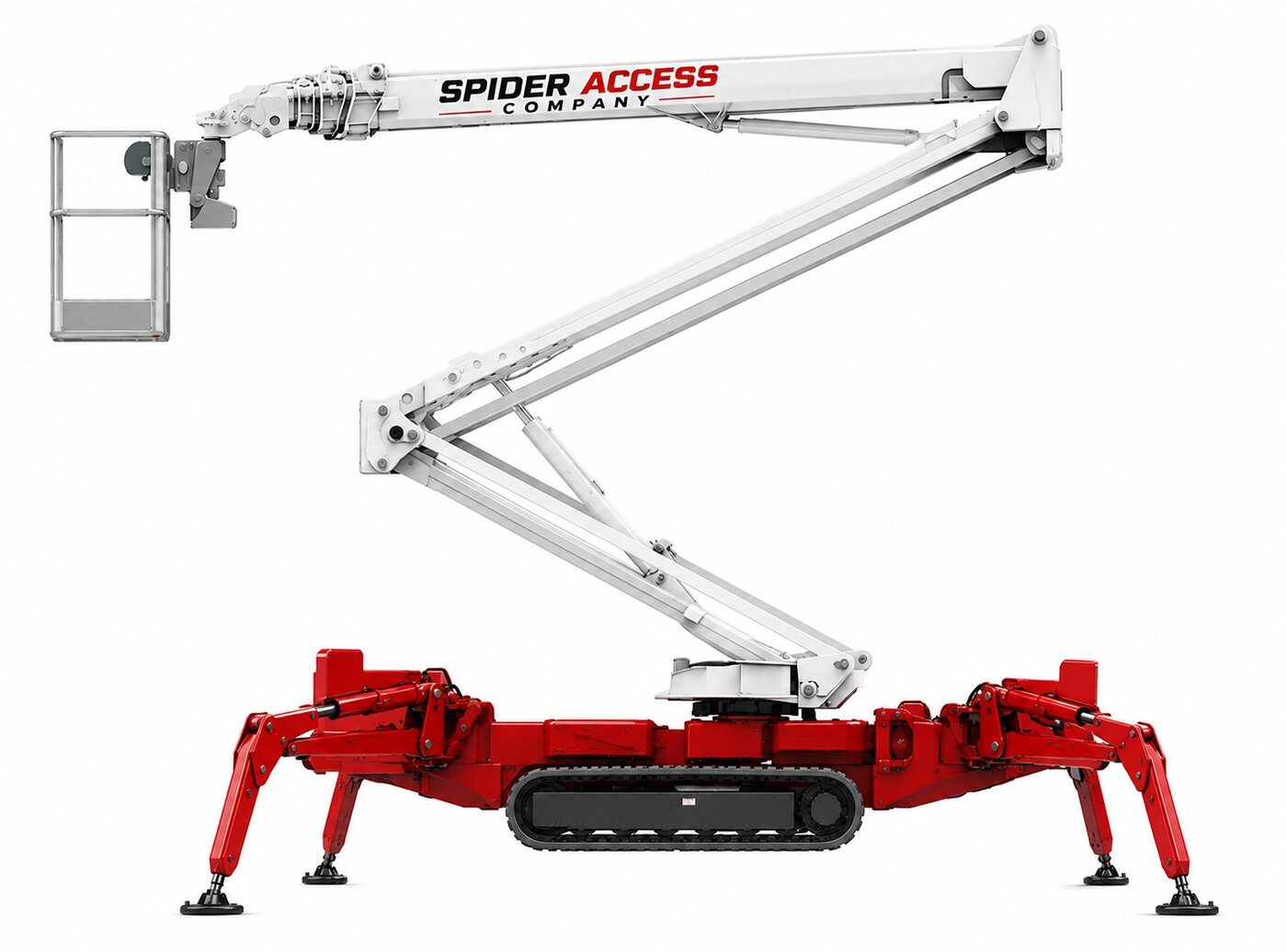
Safety
Spider Lift Safety Guide for Saudi Arabian Job Sites
Most spider lift incidents trace back to setup, not the boom. This guide walks through the checks that prevent them.
Aerial Spider Access Company HSE Team · 21 May 2026 · 9 min read
Start with the ground
Before the machine leaves the yard, confirm the ground bearing capacity at each outrigger position. Voids, buried services, basement slabs, kerbs and freshly backfilled trenches are the most common causes of instability.
Use spreader plates whenever the calculated pressure exceeds the surface's allowable loading, and never place an outrigger partly on a kerb edge.
Setup discipline
All four outriggers must be deployed and the automatic levelling system confirmed before the boom is enabled. If the machine warns of a levelling fault, reposition — do not override.
In the basket
A full body harness with a short restraint lanyard clipped to the designated anchor is mandatory. Never climb on the guardrails, and never use ladders or steps inside the platform.
Respect the rated platform capacity, including tools and materials, and account for wind loading on panels being carried.
Wind, heat and sandstorms
Stop work above the machine's rated wind speed, typically 12.5 m/s. In Saudi summer conditions, monitor hydraulic oil temperature, keep radiators clear of dust and schedule high-exposure work for early morning.
Rescue planning
Every lift needs a documented rescue plan. Ground-level emergency lowering must be tested at handover and a trained person must remain at ground level whenever the platform is occupied.