Equipment Comparisons
Spider Lift vs Boom Lift: Which Access Machine Should You Rent?
Both reach height, but they solve different problems. This comparison covers footprint, ground conditions, floor loading and total cost.
Aerial Spider Access Company Technical Team · 2 June 2026 · 8 min read
The core difference
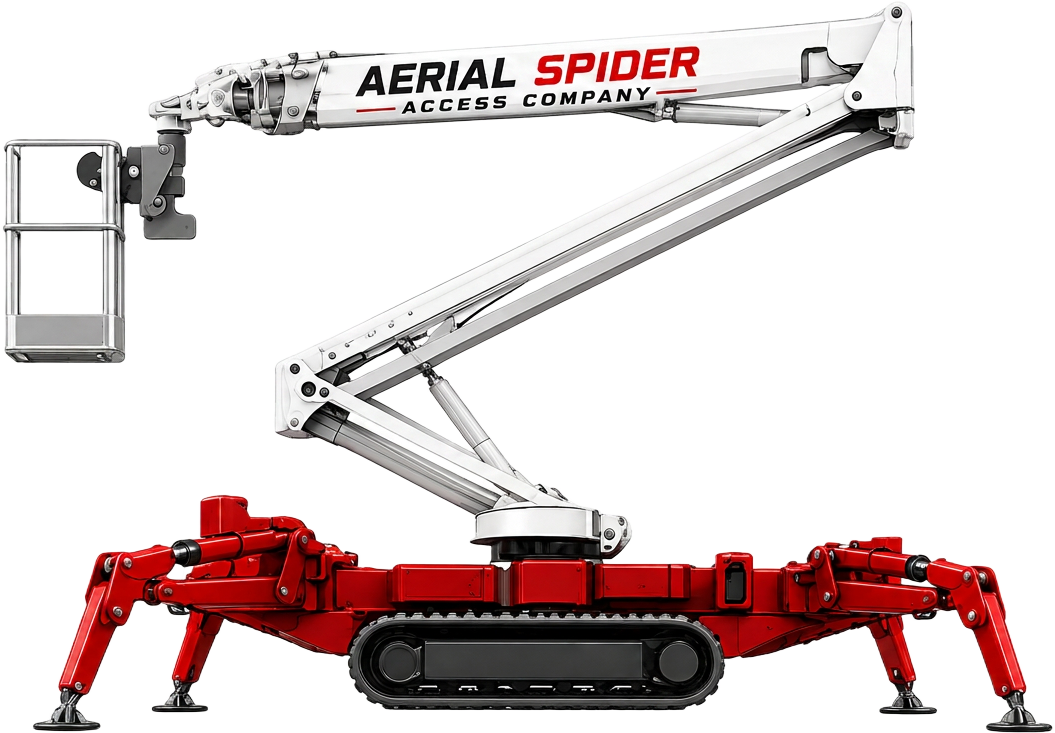
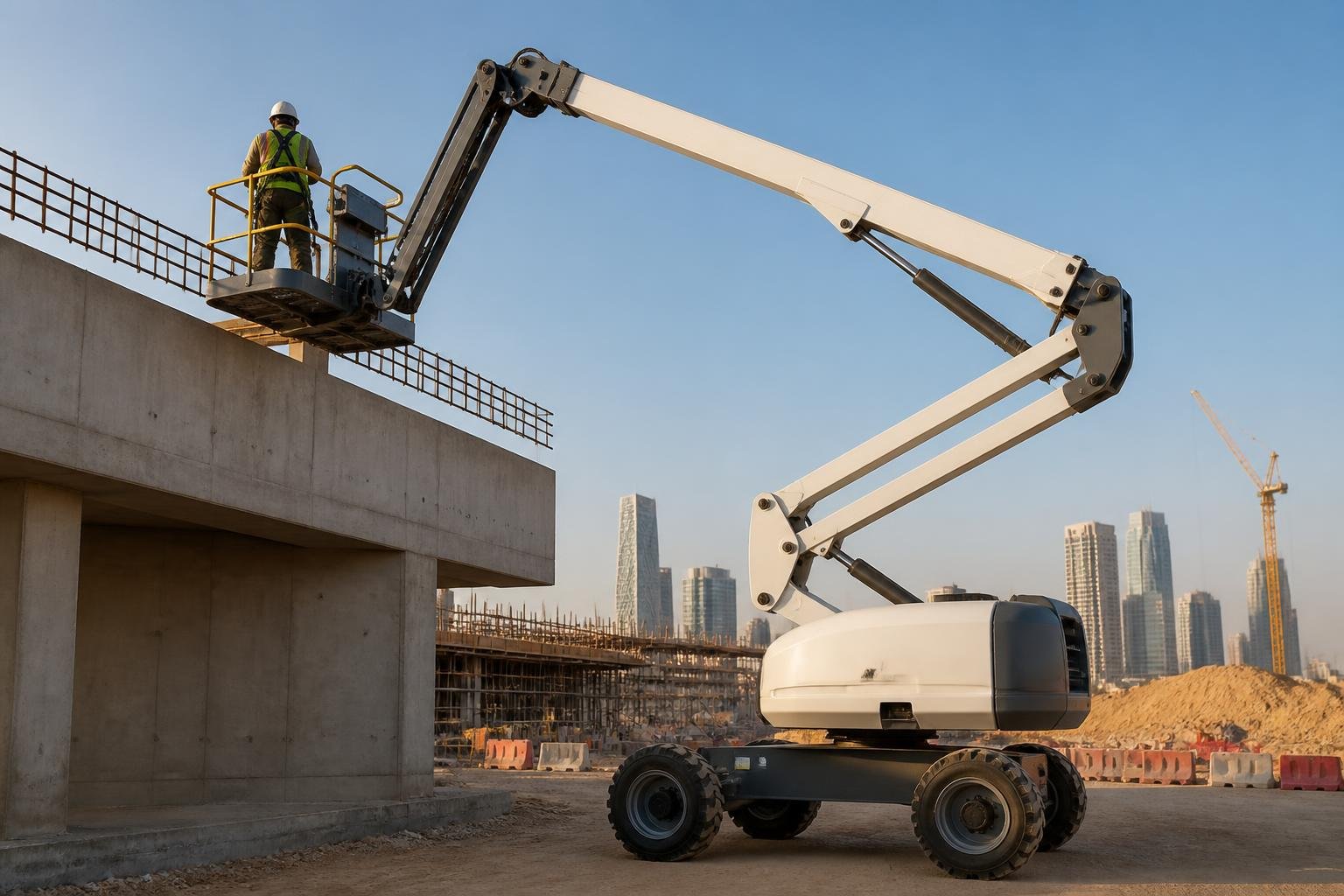
A spider lift is a tracked machine that stabilises on four outriggers before the boom is used. A boom lift is a wheeled machine that can drive while elevated. That single distinction drives every other trade-off.
Where the spider lift wins
Narrow access, indoor work, sloped or stepped ground, restricted floor loading, soft landscaping and heritage surfaces all favour a spider lift. A 16m spider lift is roughly 790 mm wide, against 1.5 m or more for the smallest boom lift.
Because outriggers spread load over pads, spider lifts are frequently the only machine a structural engineer will approve on a finished slab or podium deck.
Where the boom lift wins
On firm open ground with a long run of repetitive work, a boom lift is faster. Crews reposition without lowering and re-levelling, which can be a decisive productivity advantage on cladding runs or steel erection.
Diesel four-wheel-drive boom lifts also carry heavier platform capacities and handle compacted sand well.
Cost comparison in practice
Daily rates for comparable heights are broadly similar, so the real cost difference is productivity and enabling works. If a boom lift needs a temporary access road, crane lift onto a deck or floor protection, the spider lift is usually cheaper overall.